
In a hugely anticipated clash that once again captured the imagination of millions of fans across South Asia and around the cricketing world, Pakistan’s national cricket team suffered a heavy defeat at the hands of India in the ICC Men’s T20 World Cup 2026, leaving Pakistani supporters heartbroken and sparking a wave of analysis on what went wrong and where the team needs to go next. In the Group A match held on Sunday, February 15 in Colombo, India posted a competitive total of 175-7, powered by a brilliant 77-run knock from opener Ishan Kishan, before bowling Pakistan out for just 114 in the 18th over, resulting in a convincing 61-run win for the arch-rivals.
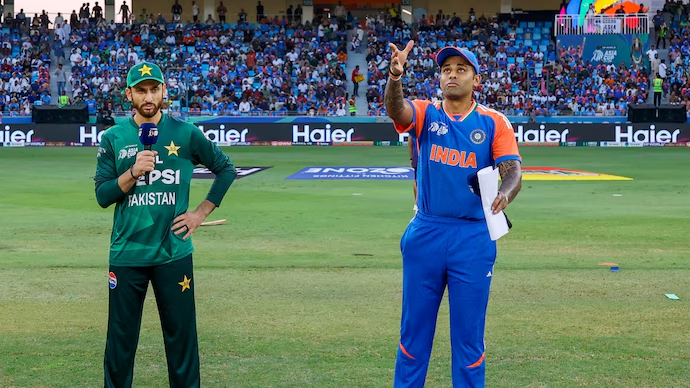
From the outset, Pakistan’s chase was plagued by instability as the top order collapsed early. Sahibzada Farhan was dismissed for a duck in the first over, putting immense pressure on the middle order, and key batters such as Babar Azam and Salman Agha failed to make meaningful contributions, leaving the chase in tatters. Despite a spirited lower-order effort from Muhammad Usman, who scored 44 runs, the team never fully recovered, and India’s bowlers maintained disciplined lines to keep Pakistan at bay.
The loss continued a troubling trend for Pakistan in high-pressure encounters against India. The arch-rivals have now faced off nine times in T20 World Cups, with India winning eight of those matches, a record that underscores India’s long-term dominance in this format. Pakistan’s defeat also extended India’s unbeaten run against them in limited-overs World Cup matches and further dented the Men in Green’s hopes of progressing smoothly into the Super Eight stage of the tournament.
For Pakistan fans and analysts, the result was more than just a number on the scoreboard, it was a moment that reignited long-standing frustrations over the team’s performance in pivotal matches against their fiercest rivals. Many commentators and former players pointed to a lack of batting application and tactical clarity as core issues, with some describing Pakistan’s innings as brittle and ill-prepared for the pressure of a big chase.The defeat sparked emotional reactions from supporters, with some expressing that the national team seems unable to rise to the occasion in marquee matches despite having talented individuals in their ranks.
The response from within the cricketing community has been mixed but intense. Pakistan’s head coach acknowledged deep disappointment in the dressing room, stressing that the players understood the gravity of the occasion and felt they were outplayed on the day. At the same time, voices from outside the team, including former cricketers, were sharply critical. A viral reaction from former legend Wasim Akram used strong language to question the team’s approach and readiness, reflecting the broader unease among fans and pundits alike about Pakistan’s strategic and mental approach to big matches.
The defeat also feeds into a wider narrative about the shifting balance in South Asian cricket, where India’s depth, consistency and high-performance culture appear to give them an edge in major tournaments. Statistics show that India’s dominance is not limited to this one match; their confidence and execution in all departments, from power hitting to disciplined bowling, have given them a psychological advantage in recent years. Critics argue that Pakistan’s cricket infrastructure and team management need to address issues such as selection policies, mentorship of emerging talents, and mental conditioning if they are to close this gap and compete more effectively against top-tier opponents.
Yet amid the criticism, there are also calls for resilience and renewal. Some players have spoken about learning from setbacks and using them to build a stronger collective identity, while supporters continue to hope that Pakistan’s cricketing system can nurture consistency and fight back. Looking beyond this particular loss, there are reminders that the rivalry between India and Pakistan, once perhaps cricket’s most electric fixture, now reflects not just passion but also the stark realities of preparation, form and execution at the highest level. Until Pakistan can consistently translate talent into performance on the biggest stages, matches against India will remain as much about learning as they are about rivalry.